 Available only in Brazil
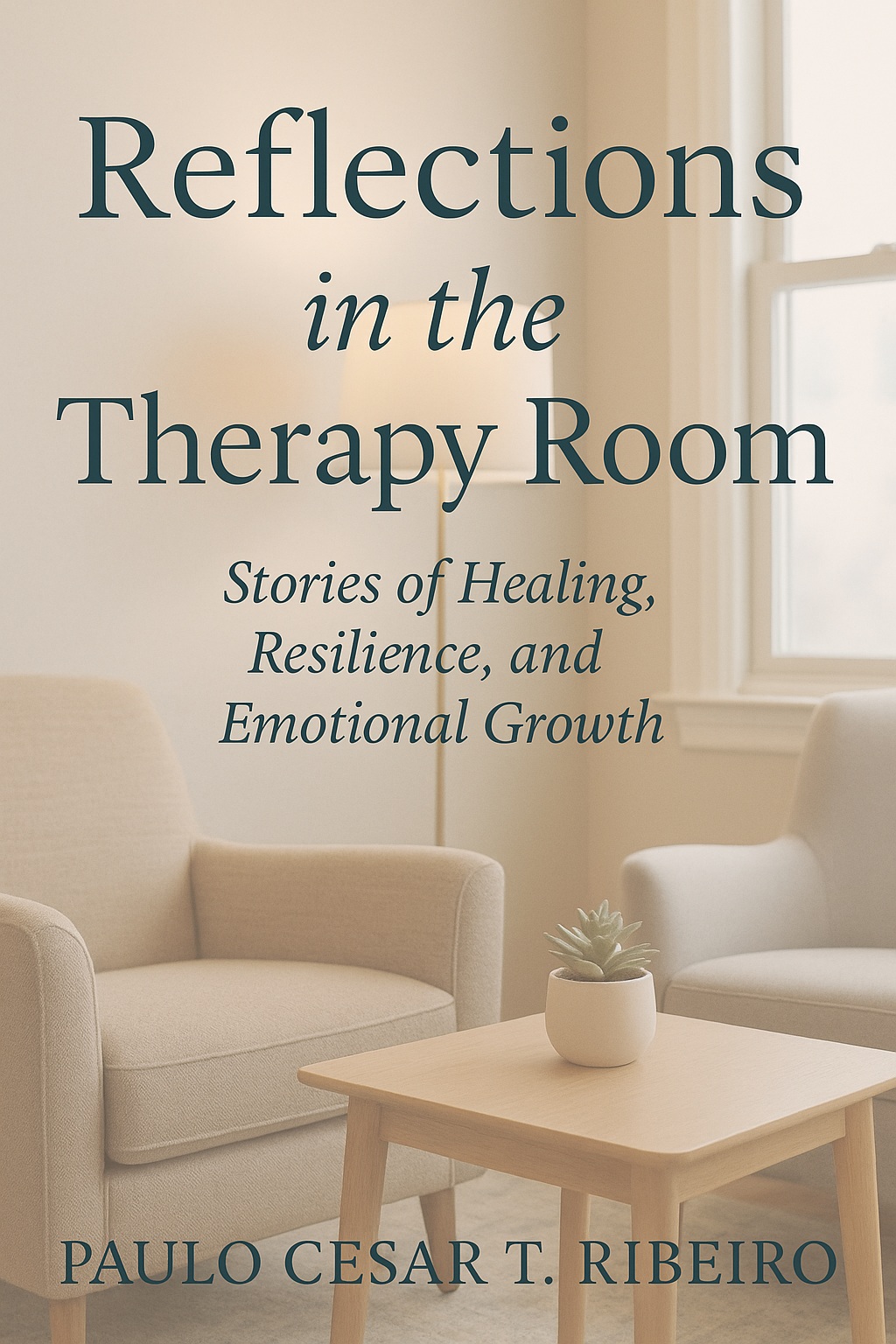
Reflections in the Therapy Room – Stories of Healing, Resilience, and Emotional Growth
Emotional Pain, Human Connection, and the Silent Search for Meaning
Versão em inglês do livro Adultos em Terapia – Reflexões Sobre Existência e Psicoterapia
There are moments in life when everything seems to keep working on the outside while something inside slowly begins to disconnect. We continue meeting responsibilities, maintaining relationships, working, producing, and trying to appear emotionally stable — yet internally we carry fears, exhaustion, loneliness, and emotional conflicts that rarely find a safe place to be truly seen.
It is precisely within this deeply human territory that Reflections in the Therapy Room unfolds.
More than a book about psychotherapy, this work offers a thoughtful and emotionally honest exploration of the invisible struggles many adults silently carry throughout life. Through sensitive reflections and deeply human observations, Paulo Cesar T. Ribeiro invites readers into an intimate journey through anxiety, emotional exhaustion, relationships, vulnerability, loneliness, identity, and the universal need for emotional connection.
The therapy room, in this book, is not presented merely as a clinical setting. It becomes a space of encounter, reflection, emotional reconstruction, and self-discovery — a place where people slowly begin to understand the hidden emotional patterns shaping their lives.
Written in a warm, accessible, and emotionally engaging voice, Reflections in the Therapy Room bridges psychotherapy, human relationships, and existential reflection in a way that feels deeply personal while remaining universally relatable. Throughout the book, readers will find reflections on:
• anxiety and emotional overwhelm
• loneliness and the need for belonging
• emotional wounds and relationship patterns
• self-criticism and feelings of inadequacy
• vulnerability and fear of rejection
• identity, authenticity, and emotional awareness
• relational trauma and emotional healing
• psychotherapy as a path toward self-understanding
• emotional maturity and human connection
• the search for meaning in contemporary life
But this is not a book built around quick fixes or simplistic self-help solutions. At its core, this work seeks to understand why so many people continue functioning externally while feeling emotionally lost, disconnected, or silently exhausted inside.
As the reader moves through the pages, it becomes clear that emotional suffering is not always created by dramatic trauma alone. Often, it emerges from small but repeated emotional absences: not feeling understood, not feeling emotionally safe, having to hide vulnerability, or believing that emotional needs are signs of weakness.
The book shows how many adults spend years surviving emotionally without ever truly learning how to listen to themselves with honesty and compassion.
By integrating psychotherapy, emotional development, and existential reflection, Reflections in the Therapy Room also presents therapy itself in a deeply human way. Therapy is not portrayed as a place where people are “fixed,” but as a space where they slowly reconnect with forgotten parts of themselves and begin rebuilding emotional awareness, authenticity, and inner stability.
At many moments, the book feels less like a clinical guide and more like a deeply personal conversation — one that invites readers not only to understand psychological concepts, but to recognize aspects of their own emotional lives that may have remained unspoken for years. Because some emotional pain does not appear through dramatic breakdowns.
Sometimes it appears: in the inability to rest, in the constant need for approval, in emotional numbness, or in the exhausting effort of maintaining a functional version of oneself while feeling disconnected inside.
This is not a book about emotional weakness. It is a book about being human. A work written for readers who seek deeper emotional understanding, greater self-awareness, and more authentic ways of relating to themselves and others.
More than offering answers, Reflections in the Therapy Room offers space for reflection, emotional insight, and inner reconnection. Because, in the end, true transformation may not happen when pain disappears — but when we finally understand what that pain has been trying to tell us all along.
━━━━━━━━━━
📖 Discover the opening of this work
Read the preface and introductory texts of Reflections in the Therapy Room and engage with the human, clinical, and reflective approach of the work before reading the entire book.
Read sample PDF
━━━━━━━━━━

T. Ricci –
►Reflections in the Therapy Room stands out not only for its emotional depth and psychological sensitivity, but also for the quality of its writing in English. The language is fluid, natural, and accessible, allowing complex emotional experiences to be expressed with clarity, empathy, and authenticity. (Reflections in the Therapy Room destaca-se não apenas por sua profundidade emocional e sensibilidade psicológica, mas também pela qualidade de sua escrita em inglês. A linguagem é fluida, natural e acessível, permitindo que experiências emocionais complexas sejam expressas com clareza, acolhimento e autenticidade.)